Power and Propulsion Systems
Achieving high speed relies on the combination of powerful propulsion and an efficient power system.
Host configuration: The mainstream configuration is a dual or quad machine setup.
Dual-unit solution: such as two MTU hosts, each with a power output of 1050kW.
Four-engine configuration: Large vessel types often employ four main engines, such as the 71-meter-class ship equipped with a four-engine propulsion system.
Propulsion method: Utilizes a waterjet, replacing traditional propellers.
The dual-machine configuration typically pairs with dual injection pumps.
The large vessel type adopts a four-jet pump propulsion system.
Design speed: The design speed is generally above 29.5 knots. Advanced ship types have achieved measured speeds of up to 33 knots, with a record top speed even reaching 41 knots.
“`🏗️ Hull and Structure“`
Material: The hull and superstructure are entirely constructed from aluminum alloy, commonly using the 5083 series and 6082 series aluminum alloys.
Hull type: predominantly catamaran, with some featuring a semi-submerged streamlined bow design or deep-V twin-hull with bilge keel.
Cabin and Comfort
Cabin Configuration: In addition to standard cabins, VIP rooms and business class are typically available.
Interior Design: The cabin features harmonious color schemes and luxurious, comfortable furnishings.
“`📋 Classification and Seaworthiness“`
Classification Societies: Primarily the China Classification Society (CCS).
Seaworthiness Zone: Primarily designed for coastal and sheltered navigation areas.
Products
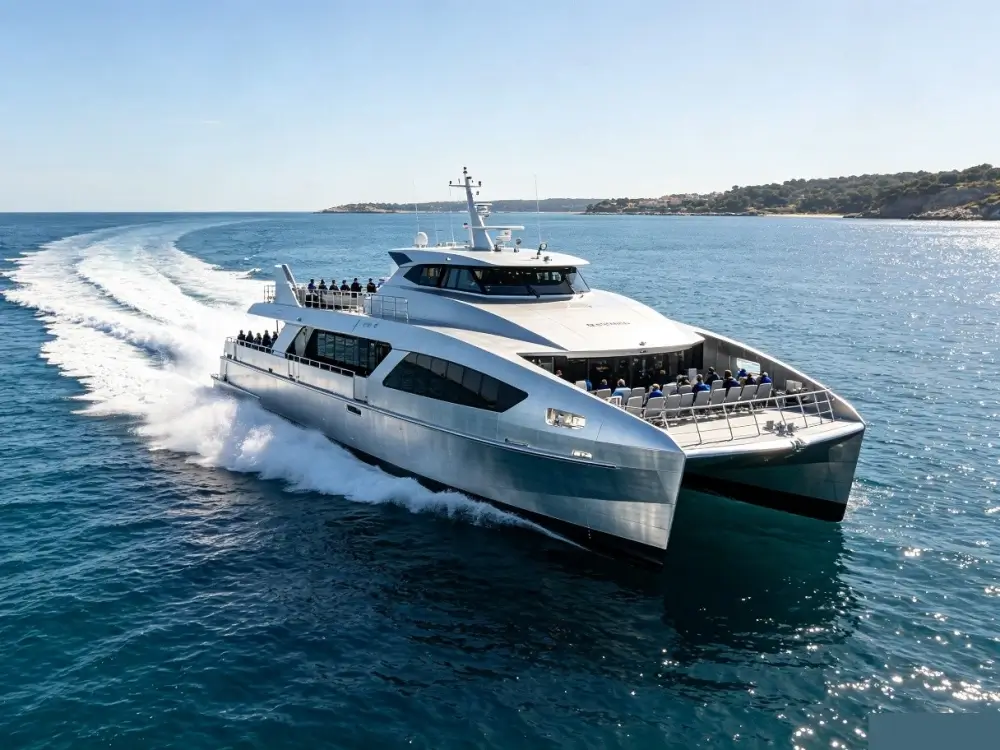
High-speed Aluminum Catamaran
28m high-speed aluminum alloy catamaran transport vessel. Lightweight twin-hull design for fast passenger and crew transport in coastal waters.


Reviews
There are no reviews yet.