
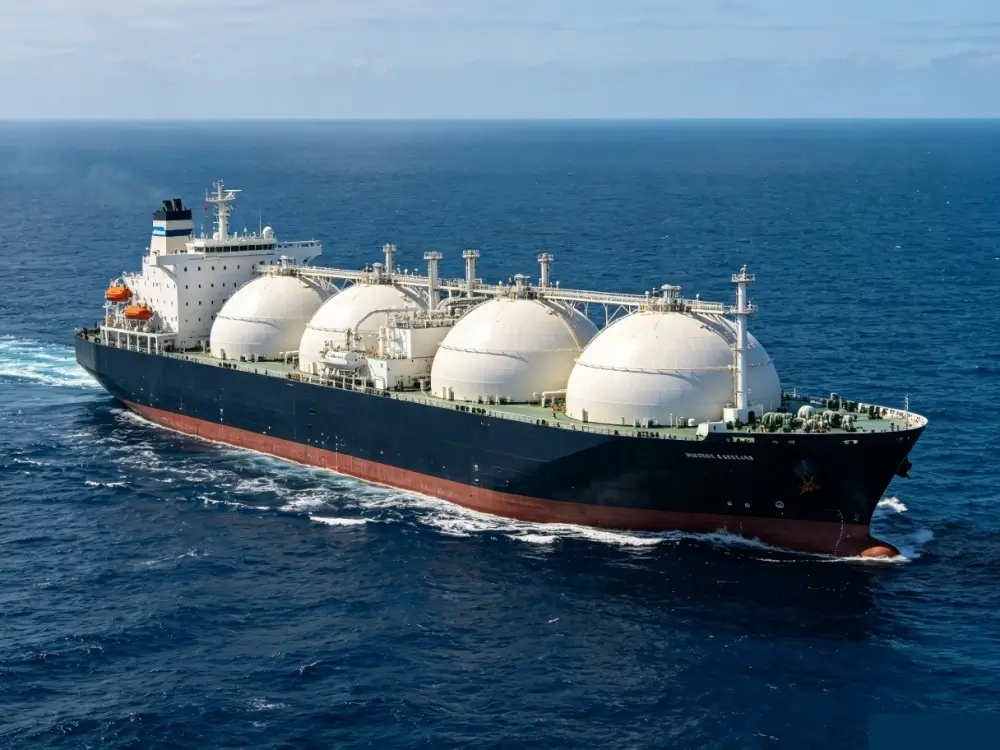
Modern large LNG transport ships have a total length of about 295-299 meters, a width of about 46-46.4 meters, and a depth of about 26.2-26.5 meters. The total capacity of the cargo hold is usually 174000 to 175000 cubic meters, and some new types of ships can reach 192000 cubic meters. The designed draft is about 11.5 meters and the designed speed is about 17-19.5 knots. The hull adopts a dual stern fin linear design, combined with an air lubrication system, which can significantly improve hydrodynamic performance and propulsion system safety redundancy.
🧊 cargo containment system
The liquid cargo containment system is the most core technology of LNG ships, known as’ embroidery ‘in the extreme cold of minus 163 degrees Celsius’. The mainstream technological routes include:
GTT membrane enclosure system (Mark III/NO96 series): currently mainstream in the market, with a daily evaporation rate controlled at around 0.085%. The evaporation rate of the NO96 Super+system has decreased by 15% compared to the previous generation. The Mark III Flex technology can achieve a daily evaporation rate as low as 0.080%.
NEXT 1 new generation enclosure system: Combining the advantages of NO96 and Mark III technology, the daily evaporation rate can be lower than 0.07%.
B-type cabin enclosure system: such as “BrilliancE ® The “II” system is made of aluminum alloy 5083-O material, which can achieve no loading restrictions and high safety and reliability.
⚙️ propulsion system
Modern large LNG transport ships commonly use LNG dual fuel low-speed engines, and both fuel and gas modes can meet the strictest emission standards of the International Maritime Organization (IMO). The main promotion plan includes:
Products
LNG Carriers
Liquefied natural gas transportation vessels featuring membrane containment systems and efficient propulsion.


Reviews
There are no reviews yet.