
Ocean transportation refers to the international shipping activity of using ships to cross oceans and transport goods between ports in different countries and regions. It is the most important mode of transportation in international trade, responsible for over two-thirds of the total global trade volume. As the world’s largest trading nation of goods, about 90% of China’s total import and export freight volume relies on sea transportation.
1、 The core operating model of ocean freight transportation
Ocean transportation mainly adopts two operating modes: liner transportation and charter transportation.
Liner transportation, also known as scheduled shipping, refers to ships docking at ports in a fixed order on a specific route according to a predetermined schedule, with relatively fixed freight costs. The goods transported by liner shipping are mainly in containers.
Charter transportation, also known as irregular vessel transportation, does not have a fixed shipping schedule and route, and can flexibly arrange ships and loading and unloading time according to the needs of the cargo owner. Chartering transportation mainly targets bulk cargo such as grain, coal, iron ore, etc.
2、 The main forms of transportation for ocean freight
Ocean transportation is mainly divided into two forms: container transportation and bulk cargo transportation.
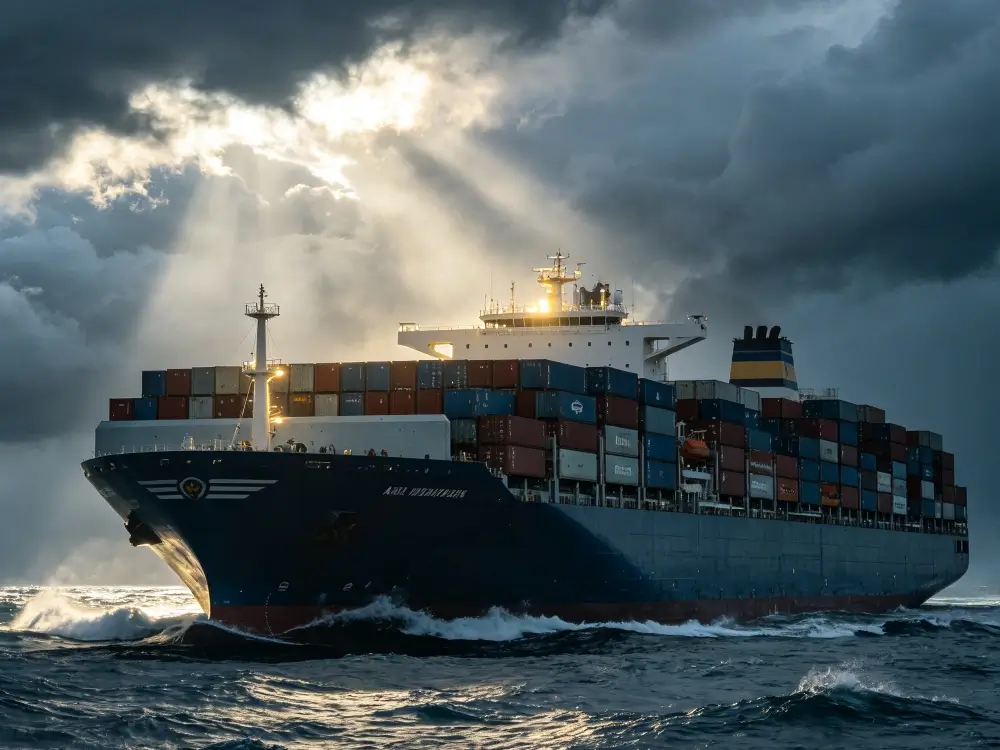
Container transportation is the most modern mode of transportation, where goods are loaded into standard containers for transportation, suitable for high value-added goods such as mechanical and electrical products, automobiles, textiles, and daily consumer goods. Bulk cargo transportation uses specialized bulk carriers to transport bulk commodities such as grain, coal, iron ore, bauxite, etc. In addition, oil tankers are specifically used for transporting liquid goods such as oil and liquefied natural gas.
3、 The main routes for ocean transportation
Ocean shipping routes are international maritime transportation routes that pass through one or several oceans between countries. The global network of major ocean shipping routes covers trade routes between continents. Taking Chinese shipping companies as an example, foreign trade routes have formed a global layout covering Europe, the Atlantic, Australia, North and South America, Southeast Asia, East and South Asia, Africa and other regions. The main routes for container transportation include the Asia Europe route, the Trans Pacific route, etc.
In recent years, many long-distance shipping routes have been forced to adjust due to geopolitical influences. For example, the Red Sea crisis led to ships circumnavigating the Cape of Good Hope, significantly extending their voyages. The exploration of the Arctic shipping route as an emerging route is also gradually advancing.
4、Market Status and Trends
The growth rate of global maritime trade has slowed down. The global maritime trade volume achieved a growth of 2.2% in 2024, but stagnated in 2025, with an expected annual freight volume of 12.783 billion tons, an increase of only 0.5%. The WTO predicts that the growth rate of commodity trade volume in 2026 will only be 1.9%. In the medium to long term (2026-2030), the average annual growth rate of maritime trade volume is expected to rebound to 2%.
The market size continues to expand. The global ocean freight forwarding market is expected to reach approximately 85.9 billion US dollars by 2025, and is projected to grow to 90.2 billion US dollars by 2026. It is expected to reach 123.1 billion US dollars by 2032. The global ocean freight forwarding market is expected to reach a size of approximately $358.3 billion by 2025 and is projected to grow to $488.9 billion by 2031.
The supply of transportation capacity continues to increase. The global container ship capacity growth rate is expected to be around 7% in 2025, and is projected to decrease to 4.6% in 2026. In 2026, there will be a historical peak in capacity delivery, with the annual delivery volume of large vessels gradually increasing from approximately 1.03 million TEUs in 2026 to approximately 2.6 million TEUs in 2028.
Freight rates continue to be under pressure. Affected by the slowdown in demand and overcapacity, the prices of European container shipping in 2025 have sharply declined, and the annual average of Shanghai’s export container settlement freight rate index has dropped by nearly 50% year-on-year. It is expected that the supply-demand structural contradiction will continue to push freight rates under pressure in 2026.
5、 Challenges Faced
Geopolitical uncertainty is intensifying. The adjustment of US tariff policies, new port fee policies, and restrictive policies on foreign ships are driving up shipping costs and changing route layouts. Sudden events such as the Red Sea crisis have forced ships to divert, resulting in longer voyages and increased costs.
Environmental regulations are becoming increasingly strict. The environmental regulations of the International Maritime Organization (IMO) are increasingly tightening, requiring ships to reduce carbon emissions. In 2024, greenhouse gas emissions from the shipping industry will increase by 5%, while only 8% of the global fleet’s tonnage has the ability to use alternative fuels. EU regulations require docked vessels to use shore power systems.
Excess capacity and cost pressure. In 2026, there will be a historical peak in capacity delivery, and the concentrated delivery of new ships will further exacerbate the supply-demand imbalance. Meanwhile, environmental compliance costs, including carbon emission pricing, are reshaping the cost structure of the shipping industry.
The bottleneck of port operation efficiency. The port is under pressure due to various interferences, resulting in congestion and prolonged waiting time for berthing. Although digital solutions have helped some ports reduce costs and increase efficiency, many developing countries are still lagging behind in this process.
6、 Future Development Trends
The green and low-carbon transformation is accelerating. The popularization of clean energy ships and the implementation of environmental policies are driving the industry towards green and low-carbon development. Green methanol dual fuel powered ships have begun to be put into use, and hybrid solutions are considered a feasible technological path.
Digitalization and intelligent upgrading. The ocean freight industry is gradually transforming towards digitization and intelligence, utilizing technologies such as the Internet of Things, data analysis, and artificial intelligence to improve operational efficiency. Intelligent ships improve transportation efficiency through digital twin and route optimization technology.