
Deck and Loading System
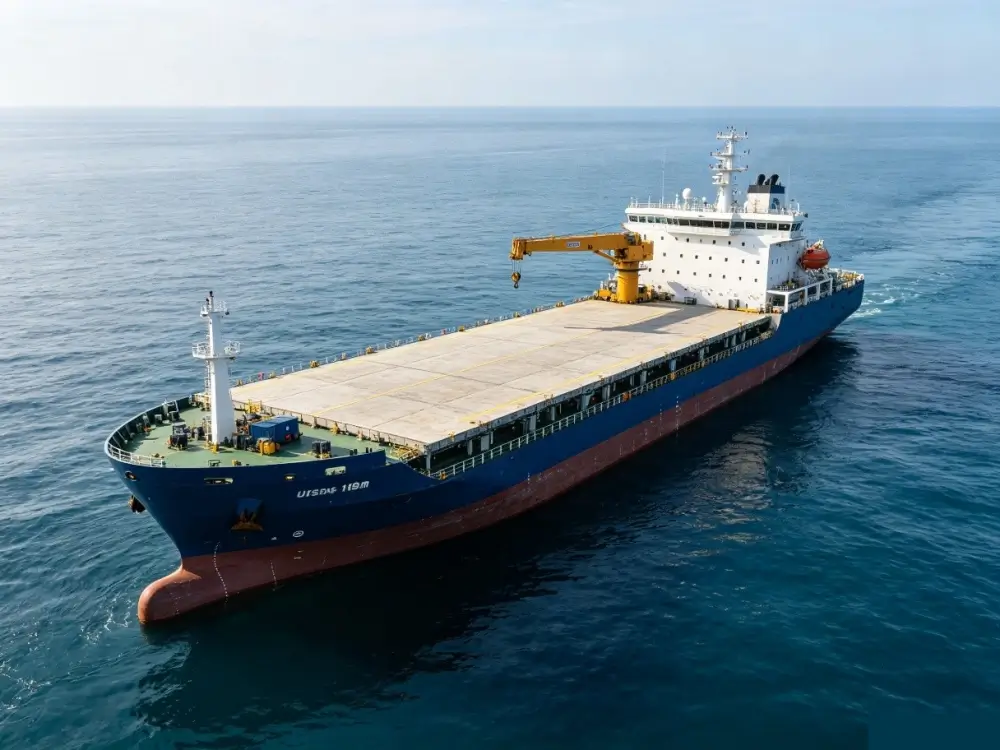
The deck is the core operational area of a deck cargo ship, and its design directly determines the vessel’s loading capacity and efficiency.
Flat and unobstructed deck: Featuring a large-scale flat deck combined with foldable railings on all sides, it creates an exceptionally open and unobstructed loading area, facilitating the placement and securing of oversized cargo.
High load-bearing capacity: The deck design load typically reaches 12 to 25 tons per square meter, capable of withstanding substantial point and uniformly distributed loads from heavy cargo (e.g., port machinery and wind turbine foundation piles).
Diverse loading and unloading modes: Some vessel types support stern ramp roll-on/roll-off operations, significantly enhancing cargo handling flexibility and compatibility with various cargo types.
Optimize the ballast system:
Small compartment layout: The ballast tank adopts a small compartment design, enabling rapid adjustment of the vessel’s floating condition to ensure stability during loading, unloading, and navigation.
Centralized Ventilation Design: The ventilation pipes are concentrated and routed to the rear wall of the superstructure, completely eliminating deck-level ventilation stacks. This maximizes deck openness and ensures “zero obstruction” for cargo stacking.
Ballast water transfer: Some vessels’ ballast systems allow for the transfer of ballast between left and right tanks or fore and aft tanks, significantly improving loading and unloading efficiency.
⚙️ Power and Propulsion Systems
To meet the safety and efficiency requirements of ocean transportation, modern deck cargo ships are equipped with powerful and highly reliable power systems.
Propulsion method: Most configurations feature twin engines and twin propellers. The new generation of large vessels widely adopts a dual-redundant electric propulsion system, with two independent units serving as backups, ensuring basic vessel maneuverability even if one fails.
Main engine power: For a 12,000-ton vessel, the main engine power is approximately 1,620 kW × 2; while for a 30,000-ton large vessel, the main engine power can reach 4,400 kW × 2.
Designed speed: The designed speed typically ranges between 10 to 15 knots.
🎯 Positioning and Control System
Dynamic Positioning System: High-end deck cargo ships are typically equipped with IMO-compliant DP2 dynamic positioning systems, enabling precise position maintenance at sea, particularly suitable for high-precision operations such as offshore wind turbine installation and platform module对接.
Bow thrusters: Vessels are typically equipped with bow thrusters, while large ships may even have twin thrusters with redundancy mechanisms to enhance maneuverability in narrow waterways and harbors.
“`🌱 Environmental Protection and Range Configuration“`
Smart Ship Management System: Integrates advanced autonomous driving technology with big data analytics to achieve route optimization, intelligent energy efficiency, and smart engine room management, thereby reducing fuel consumption and enhancing operational efficiency.
Endurance: The endurance of large ocean-going deck cargo ships typically ranges from 16,000 to 18,000 nautical miles, enabling intercontinental transportation capabilities.
“`📋 Classification and Seaworthiness“`
Classification societies: Commonly recognized ones include CCS (China Classification Society), NK (Nippon Kaiji Kyokai), OMCS, etc.
Seaworthiness Area: Primarily designed for unlimited navigation, capable of operating in all global waters.
Products
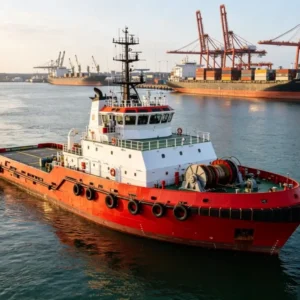
Deck Cargo Vessel
119m deck cargo vessel with large open deck for heavy equipment and project cargo transport. Ideal for offshore construction logistics.


Reviews
There are no reviews yet.